Routes, Plans, Adjustments
Reworking a journey through the Kii Peninsula, choosing fewer stops, slower travel, and more time to actually experience the places along the way.
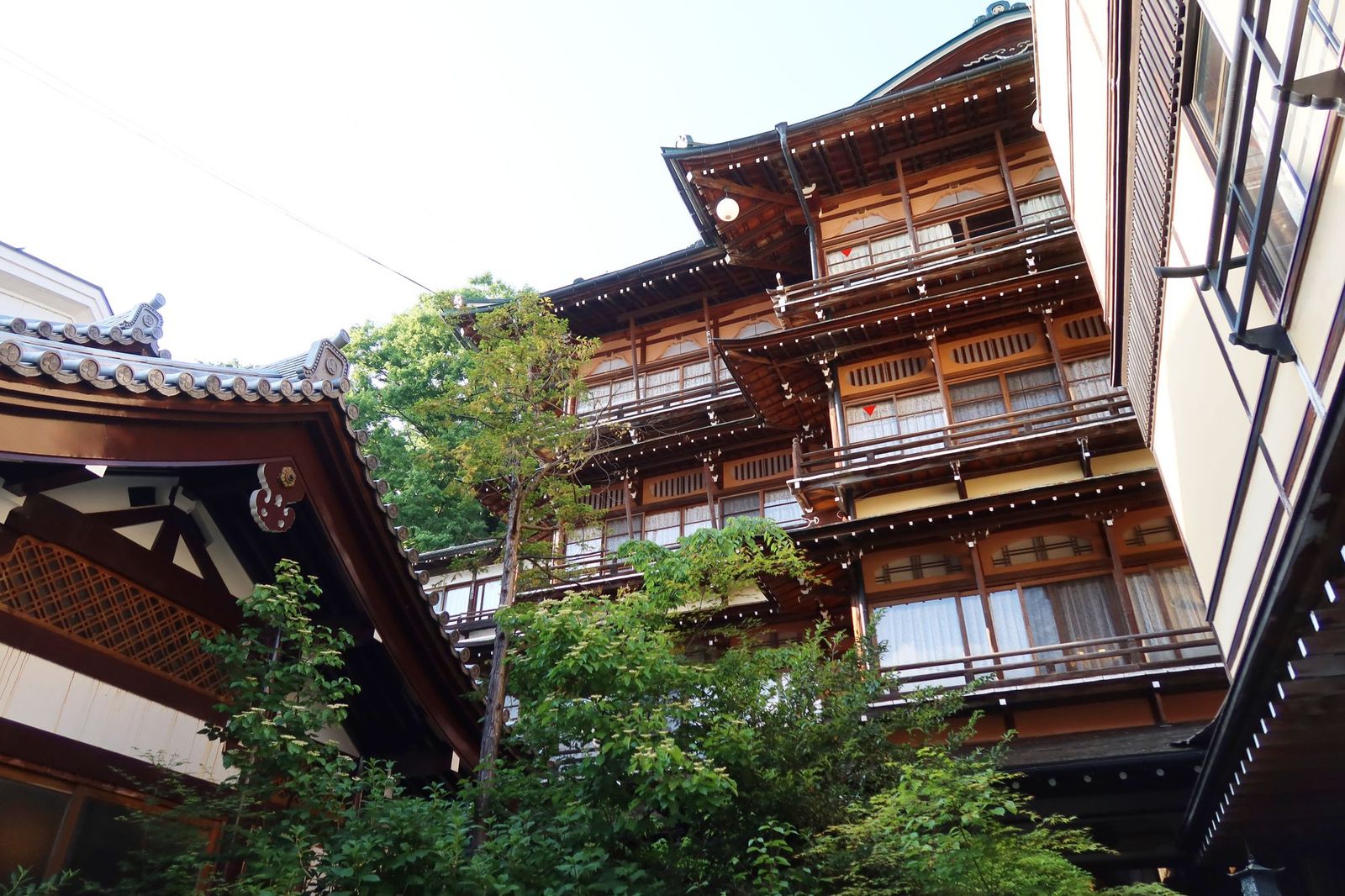
Time is often the biggest limitation in planning. Mapping and remapping. Weighing and considering places to visit while ruling out others.
The Path We Choose
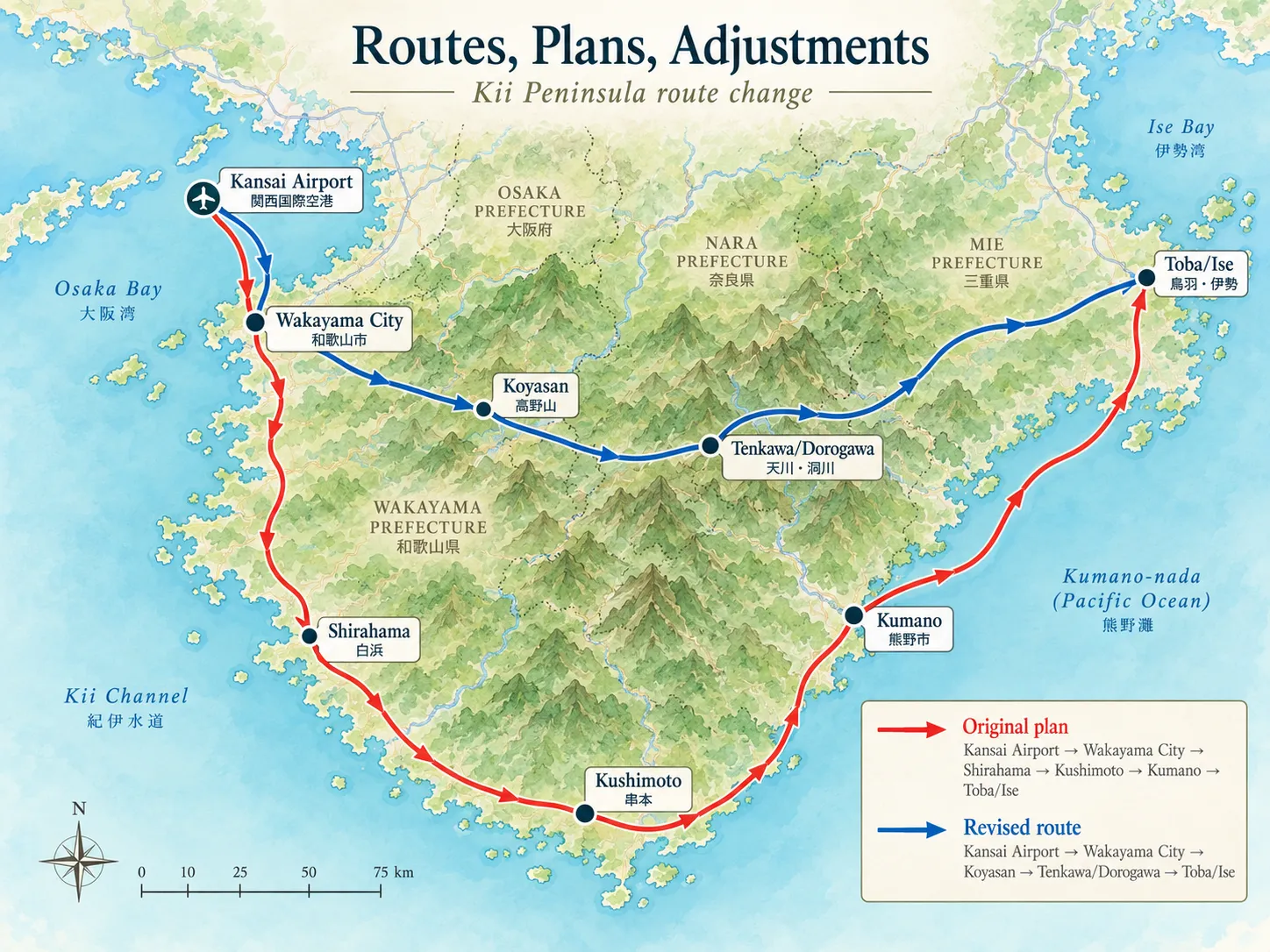
Originally, we had been planning to travel around the Kii Peninsula something like this:
Kansai Airport → Wakayama City → Shirahama → Kushimoto → Kumano → Toba/Ise
This would maximize our time along the seaside while letting us stop along the way on the JR Kinokuni Line. This wouldn’t be the Kumano Kodo, but we would get to see segments of it on our way toward Ise.
The trade-off was that, with our limited time, we wouldn’t be able to visit Koyasan and most likely wouldn’t spend any time at a mountain ryokan.
After much talking and debate, interspersed with more than a few YouTube videos, we opted to alter our plans for the beginning of the trip.
Our reasons were these:
- Koyasan is a major draw and would be sad to miss.
- Mountain ryokan with fall colors?!
- More time along the Shima coastline, with some Ama diver-focused activities.
- A bit more time in Nara.
- More time in Kyoto.
- A day in Osaka.
So I pored over the map, redrew the lines several times, Googled destinations along the way, and ultimately boiled things down to a much tighter segment:
Kansai Airport → Wakayama City → Koyasan → Tenkawa/Dorogawa → Toba
This is a pretty big shift from where the planning started, but ultimately I have to make peace with the fact that I can’t see and experience everything in one trip that is less than two weeks long.
Some of the trade-offs are going to be about spending more time in fewer places rather than turning the trip into a marathon.
I think this is important, and we both agree. It is more valuable to make time to be still in a place and allow yourself to feel it than to be so tightly scheduled that you are in a frenzy, stressed about making it to the next destination.
Travel is about the journey.
Plus! Jonathan gets to experience the raw and visceral joy of driving a small car through the winding mountainous roads of the Kii Peninsula.
I would say you can’t put a price on that, but I’ve already paid for the car rental, which I assure you does, in fact, come at a price.
A Slower Beat
With the changes to the beginning of the trip, we will be able to visit Koyasan.
Koyasan is one of the great centers of Buddhism in Japan and the heart of the Koyasan Shingon tradition. Kōbō Daishi, also known as Kūkai, established the monastic center here in the early ninth century after returning from his studies in China.
Shingon is an esoteric form of Buddhism with a rich tradition of ritual and symbolism. Mandalas, mantras, mudras, and the interplay of body, speech, and mind—the Three Mysteries—are all part of a tradition that feels visually and philosophically dense.
It is part of what makes Koyasan so fascinating to me.
We won’t have enough time to explore every temple or disappear into the mountain for several days. Instead, we will spend the middle part of the day there.
And I think I am becoming okay with that.
There is something appropriate about visiting a place associated with contemplation without turning the experience into a checklist.
Mountain Soak
Another addition made possible by this new route will be a stay at Atarashiya Ryokan in Dorogawa.
This is one I am especially excited about.
One of the quintessential images that comes to mind when I think about the mountains of Japan is a mountain onsen in autumn: maple leaves, wooden sandals, yukata, cool mountain air, and a long soak in hot water.
There are certain experiences that become tangled up with your imagination of a place long before you ever arrive.
This is one of mine.
After Koyasan, we’ll drive farther into the mountains toward Dorogawa and, for a little while at least, stop moving.
Leaving Something for Next Time
The coastline we originally planned to follow isn’t going anywhere.
Neither is the Kumano Kodo.
There will always be another village, another temple, another train line disappearing along the coast that I wish we had time to explore. Trying to fit all of them into a single trip would probably mean experiencing less of each one.
So perhaps the better itinerary isn’t the one that includes the most.
Maybe it is the one that leaves enough space to notice where you are.
For this trip, that means a sacred mountain, winding roads through the Kii Peninsula, an autumn evening at a ryokan, more time beside the sea in Shima, and fewer reasons to look at the clock.
And a few things deliberately left for next time.