Fireweed
A field note on fireweed, from Alaska’s glacial landscapes to its traditional uses, ecology, and surprising presence in California.
 F02
F02133.4072° W
A remarkable plant with vivid coloration.
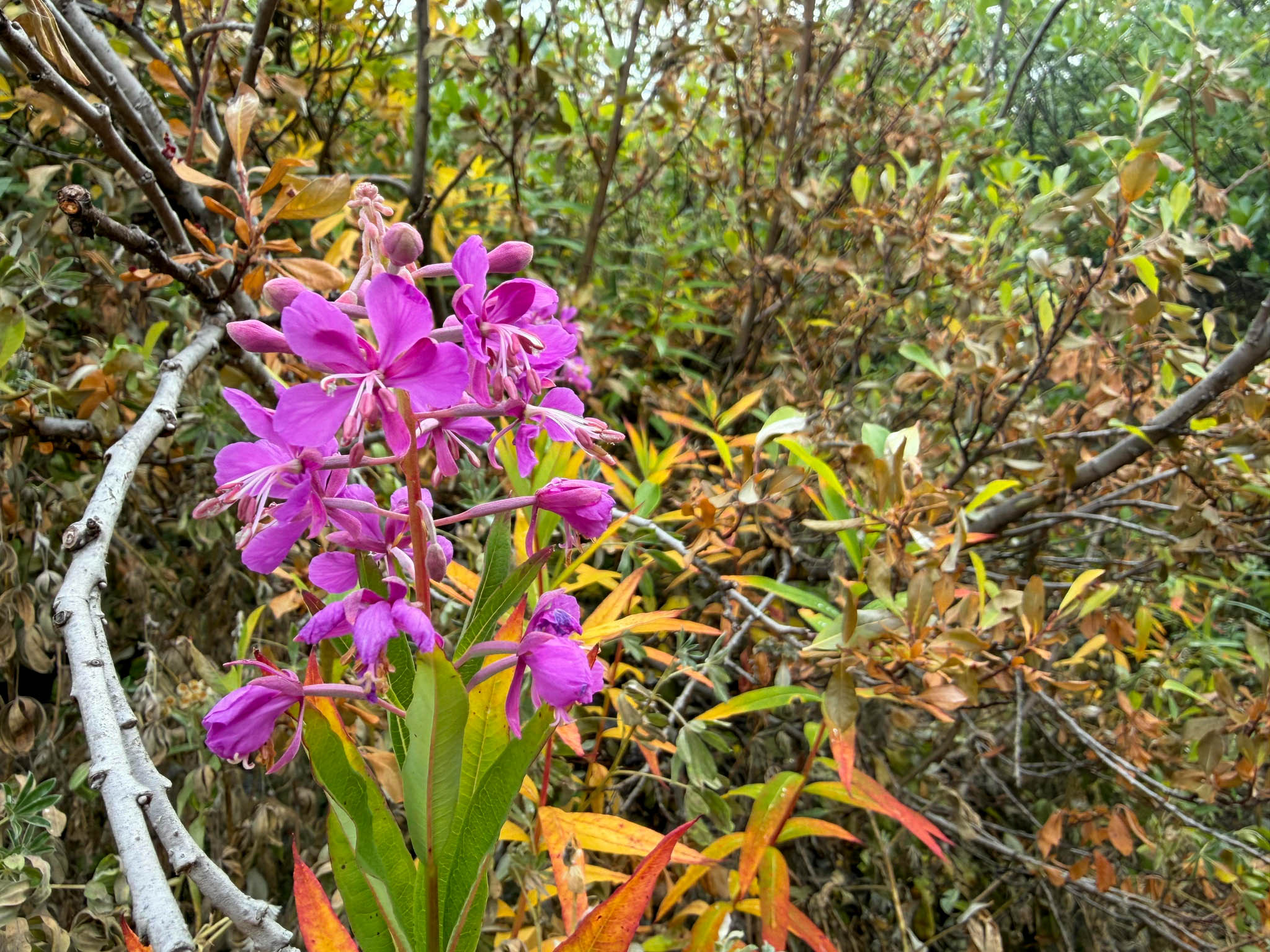
Fireweed
Scientific Name: Chamerion angustifolium
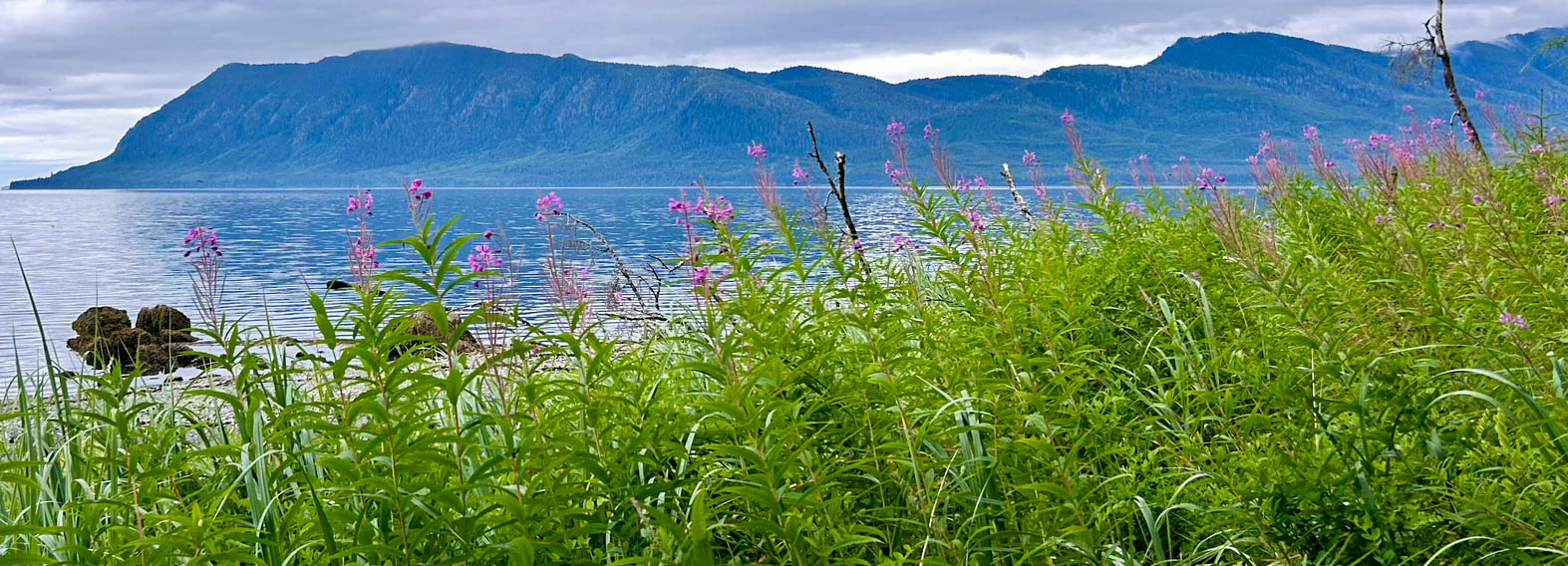
While kayaking around Chimney Rock with our guide Acadia, from Anchorage, Alaska, she identified a flower standing above the waterline, crowding the space at the base of the rock and along the edge of the island forest: fireweed.
Acadia shared a story from childhood, when her mother would ask her to help collect the flowers for fireweed jelly and infused honey.
After identifying the plant during our kayak, I began noticing its presence throughout the rest of the trip, growing in remarkably different places and forms.
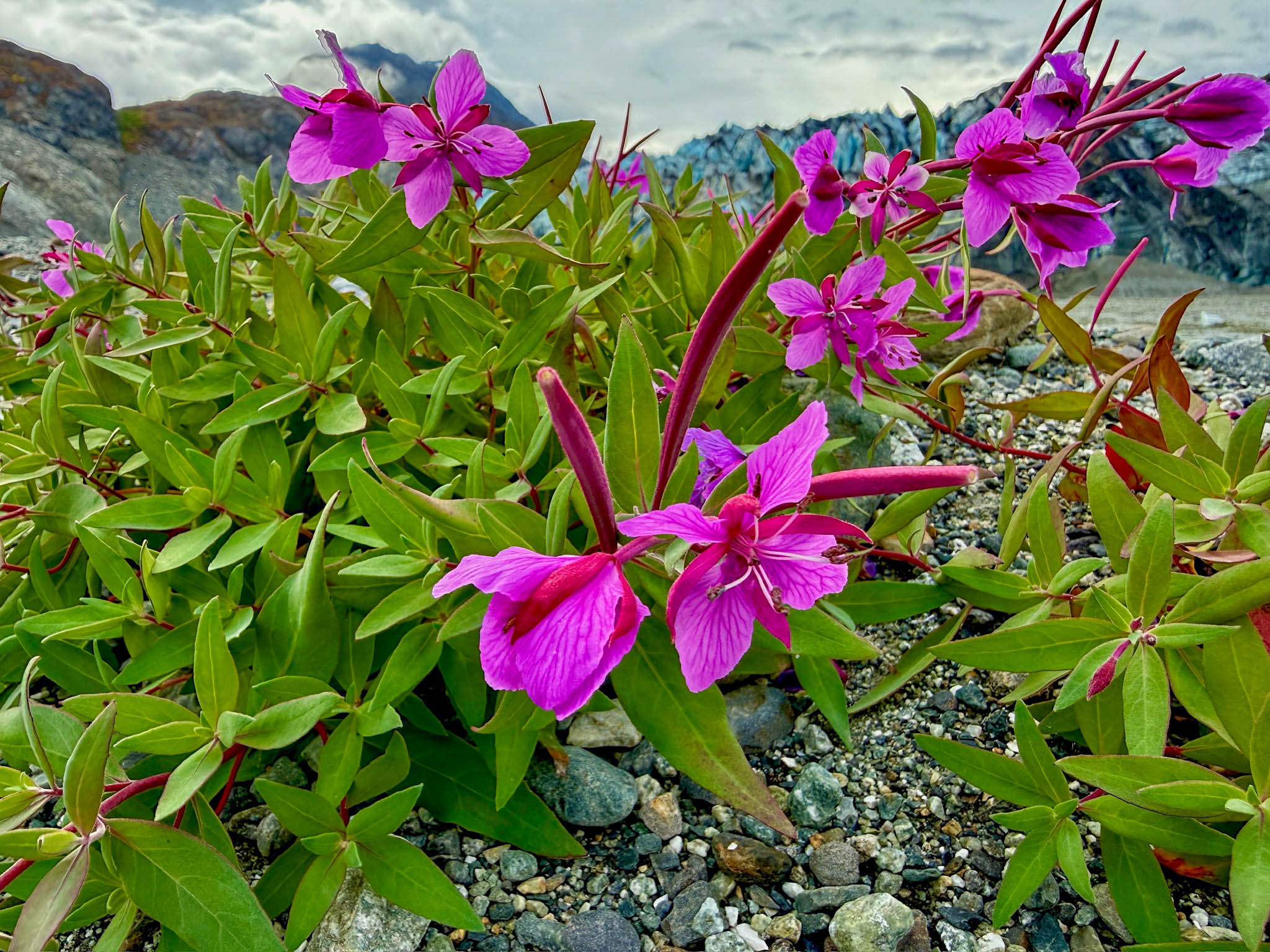
I was able to photograph two species of fireweed: Chamerion angustifolium, common fireweed, and Chamerion latifolium, dwarf fireweed, also known as river beauty. The dwarf species is considerably more compact and is often found growing among gravel, glacial outwash, riverbanks, and landscapes recently exposed by retreating glaciers.
Common fireweed becomes increasingly interesting the more you learn about it. In Alaska, it also serves as an informal marker of the progression of summer. Its flowers open gradually upward along the stalk before giving way to long seed capsules filled with silky white fibers.
“When the fire turns to cotton, summer is soon forgotten”
Commonly Associated Properties:
- Anti-inflammatory
- Antioxidant
- Astringent
- Antimicrobial
- Soothing
- Wound-supportive
These properties are associated with its traditional use and with compounds identified in the plant, including tannins, flavonoids, phenolic acids, and the ellagitannin oenothein B. Much of the modern research remains laboratory-based, so these associations should not necessarily be understood as established medical treatments.
Fireweed has been used in teas, jellies, syrups, honey, and candies, and young shoots have historically been eaten as a spring vegetable. It has also found its way into salves, lotions, creams, and other botanical preparations.
There is a long history of fireweed use among Indigenous peoples of Alaska and other northern regions, both as food and medicine. Different communities developed their own preparations and traditions around the plant, including teas, poultices, washes, and the use of young shoots as food.
Perhaps surprisingly, fireweed is not uniquely Alaskan. Its range stretches across much of the cooler Northern Hemisphere, occurring throughout northern North America, Europe, and Asia. Generations of people separated by enormous distances have found uses for the same plant.
Its English name comes from one of its most characteristic habits: fireweed is exceptionally good at colonizing disturbed land, particularly after wildfire.
It is typically found in these types of locations:
- recently burned forests
- logged areas
- forest openings
- avalanche paths
- roadsides
- stream margins
- moist meadows
- boreal forest
- alpine meadows
- recently disturbed
- deglaciated ground
Farther north, fireweed can grow almost at sea level. As its range extends southward, it increasingly retreats into cooler mountain environments. Across its enormous range, it has been documented at elevations approaching 15,000 feet in the Himalayas.
And one particularly exciting discovery for me: fireweed is native to California as well.
Here the western form, Chamerion angustifolium subsp. circumvagum, can be found in the mountains of Northern California and the Sierra Nevada.
So now I have another flower to look for closer to home.