Reflections in the Tongass
Reflections on Glacier Bay, fireweed, the Tongass, and the seasonal rhythms that shape life in Southeast Alaska.
 08
08133.4075° W
Sometimes the best experiences begin with no real plan at all, just a willingness to show up and see what happens.
Glaciers!? Oh wait…
When you think about Alaska, what is it you imagine? Grizzly bears, ice-covered lands, orca, hunters in plaid wearing suspenders with beanies slightly askew? I have no way of knowing where the image I imagined came from, but I think it is probably a subtle mix of remote wilderness, Arctic snow and ice, with a dash of Native peoples living in ice huts, eating seal meat while defending against grizzlies or polar bears. You know, large bears who are marauding around, breaking into hunting cabins and wrestling with the aforementioned hunters.
Alaska in life is far different from what my child brain had imagined.
Realignment
One of the most striking impressions was the similarity to the Pacific Northwest. I felt like I was in a wetter, more mountainous Puget Sound. There are glaciers in the deeper recesses of fjords and water channels where chunks of ice calve into the sea. Much to my delight, it is vibrant and rich forest. Like the Olympic Peninsula, where you can sort of feel the low hum of the forest all around you, but in a setting with over 1,100 islands.
Itinerary Details
AdventureSmith Explorations - Glacier Bay Adventure Cruise - 2 Days in Glacier Bay
Glacier Bay National Park
The mission of the National Park Service:
“…to conserve the scenery and the natural and historic objects and the wild life therein and to provide for the enjoyment of the same in such manner and by such means as will leave them unimpaired for the enjoyment of future generations.”
—National Park Service Organic Act; August 25, 1916
When you couple this with the unique, dynamic, tidewater-glacier-shaped landscape and associated natural succession of Glacier Bay National Park, you get to witness something truly unique within the park system.
I was fortunate enough to get a chance to spend two whole days within the park on UnCruise’s Wilderness Discoverer. I swam in the waters near Lamplugh Glacier, witnessed the forces of natural succession as the forests reach to reclaim the exposed lands abandoned by glacial retreat, kayaked through teal water rich in glacial flour, and climbed through devil’s club and among the Sitka spruce seeking sweet berries that seemed to be everywhere throughout the temperate rainforest.
Island Forests Patrolled by Bears and Whales
I loved the foggy, rain-spotted days, kayaking in almost glass-like conditions on the Inside Passage channels. No humans, no traffic, no noise.
You could hear whales spouting, the sound carrying over the water great distances but sounding like they were with you as they made their journeys through the straits rich in zooplankton and small fish. You could hear the family-like arguments of ravens and crows, punctuated by the occasional call of a bald eagle.
Walking through the forests and muskegs, I feasted on blueberries, huckleberries, and salmonberries. I even found a cloudberry!
Walking, crawling, ducking, and climbing over things as we navigated the forest, I saw signs of bear passage and moose scat but never the owners. The Tongass National Forest is comprised of 16.7 million acres. While there are breaks within its boundaries, it is ruled by the large beasts and birds. Stunning and almost primal.
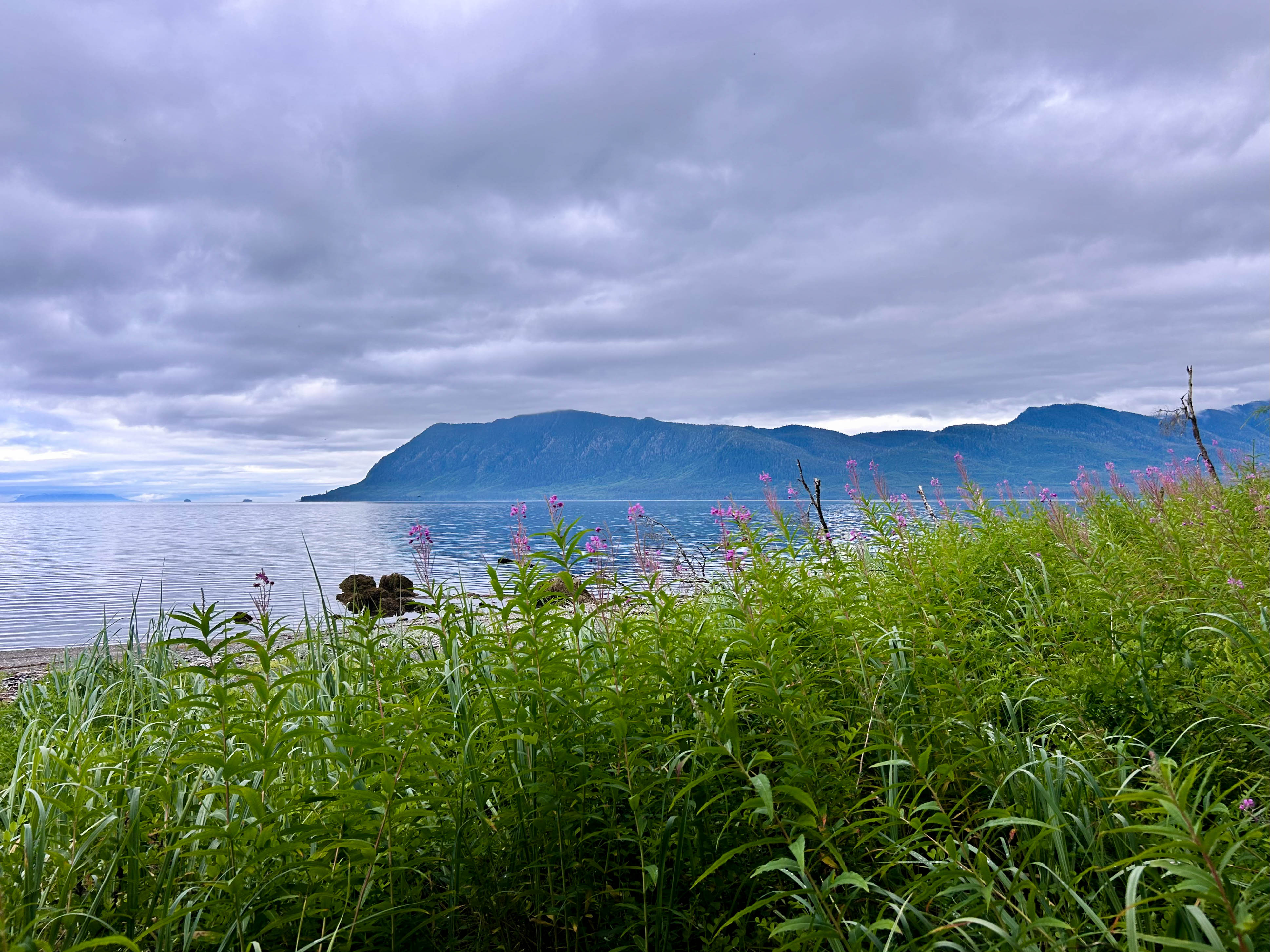
I learned about a plant that is harvested by locals for honey, syrups, and teas called fireweed. It is a pioneer plant. Exceptionally good at moving into open ground after disturbance, stabilizing soil, providing nectar for bees and other pollinators, and helping begin the transition toward a more complex plant community.
Fireweed is a plant of beginnings. It appears where the landscape has been opened after flame, flood, logging, or retreating ice and turns exposed ground pink with life.
Our guide shared it as a plant that readily indicates the timing of the season. At the beginning of summer, the lower parts of the stalk begin to flower. As the season progresses, the flowers move slowly up the stalk. Once the top of the stalk has flowered and the lower seedpods begin to open, summer is over.
Alaska’s summer clock.
“When the fireweed turns to cotton, summer will soon be forgotten.”
Seasonality is a punctuation point in Alaska.
Winter is coming.
Things That Might Be
When I have the chance to listen to the natural flow of life, away from my daily toils of work centered around tasks and deadlines, I am reminded of how much I love the outside. The magical mysteries of the plants, herbs, and trees that surround us. The cyclical lives of the animals and their observations of the seasons.
I am reminded of myself, of my best friend and husband. The many paths we are walking toward our goals. Where we began, where we are, and where I hope we get someday soon.
Our beginnings are founded in a joint love of nature. From touching the soil to staring at the stars. Observing, swimming, climbing, harvesting…
We both believe that life is meant to be lived in harmony with the Earth. To return to movement in seasonal cycles.
I want to gather fireweed.