Pillow Landings
Choosing where to sleep in Japan becomes an exercise in culture, comfort, compromise, and learning when to stop planning and simply arrive.
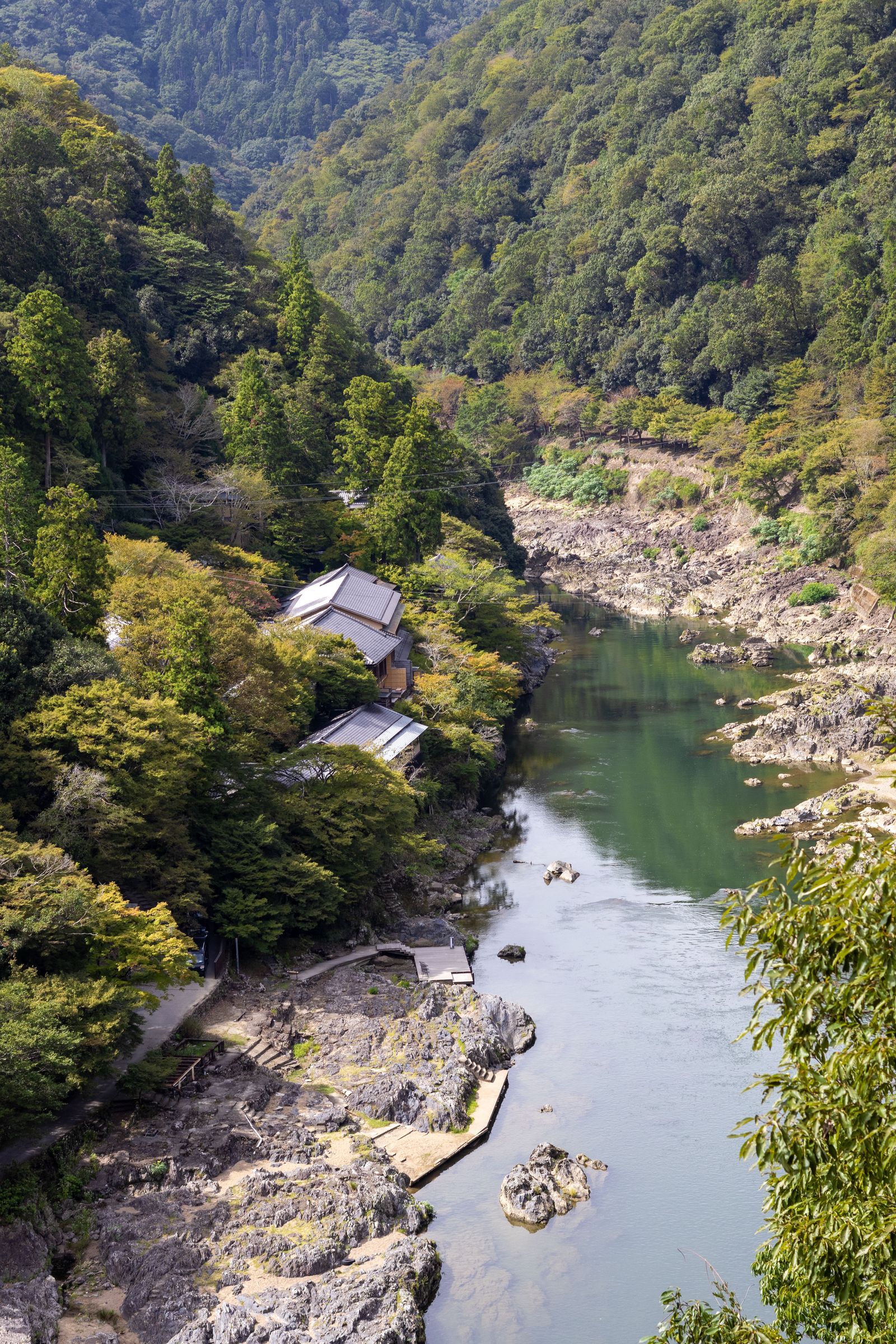
The grueling journey of comparison, hunting, reading, despairing, and selecting the location where the pillow goes.
Racing Around the Loop
Conceptually, every travel arrangement is a loop, because at some point you end up at home. If you don’t, that might be called something else. A journey? Running away?
Once you have selected the destination of your travel, you must decide where you will go in that area. Simple enough, right? Let’s layer some complexity into the mix.
Travel in Japan often rewards planning ahead. Businesses frequently structure reservations around early booking, with discounts for people willing to commit 60 days or more in advance. Makes sense, right? It lets the business know what the books will be like ahead of time instead of hoping for things to fill up at the last minute.
Straightforward. Planned. Curated. Executed.
Which means you need to know where you’re going, where you would like to stay, the route to get there, and a general idea of what you are doing that day.
Start your engines. Cue up the browser. Clear your cache. GO!
Sources
When you are going somewhere you have never been before and don’t have personal, close, best friends who share your taste and have gone before you, how do you decide where the pillow goes at the end of the night? What if you are the forerunner for this uncharted land in your friend circle?
I think we all do the same general thing. We turn to blogs, AI, YouTube videos, TikToks, mysterious nighttime rituals asking for insight. Through these, we try to find people whose ideas and presentation mirror our internal mechanisms, or at least some approximation of our value system.
When it comes down to it, a lot of foreign travel is gut checks. A long series of looking at photos, checking locations on maps, going through reviews, ruling stuff out, and talking about what is important about the area you are going to. Will you die on that futon? What even is a tatami mat?
With this being our first trip to the Land of the Rising Sun, there is a lot of pressure not to miss any experience. To take in all the unique and authentically Japanese experiences that are out there. Ryokans and their famous hospitality.
Experiential Choices
Let’s clear up some terms here:
Ryokan 旅館 — A traditional Japanese-style inn that offers guests an immersive cultural experience rather than simply a place to sleep.
Tatami 畳 — A traditional Japanese floor covering made from a compressed rice-straw core and a woven soft-rush grass surface. It has some give and cushioning.
Shikibuton 敷き布団 — Often referred to simply as a futon. A flexible mattress typically placed on tatami and folded or rolled away when not in use.
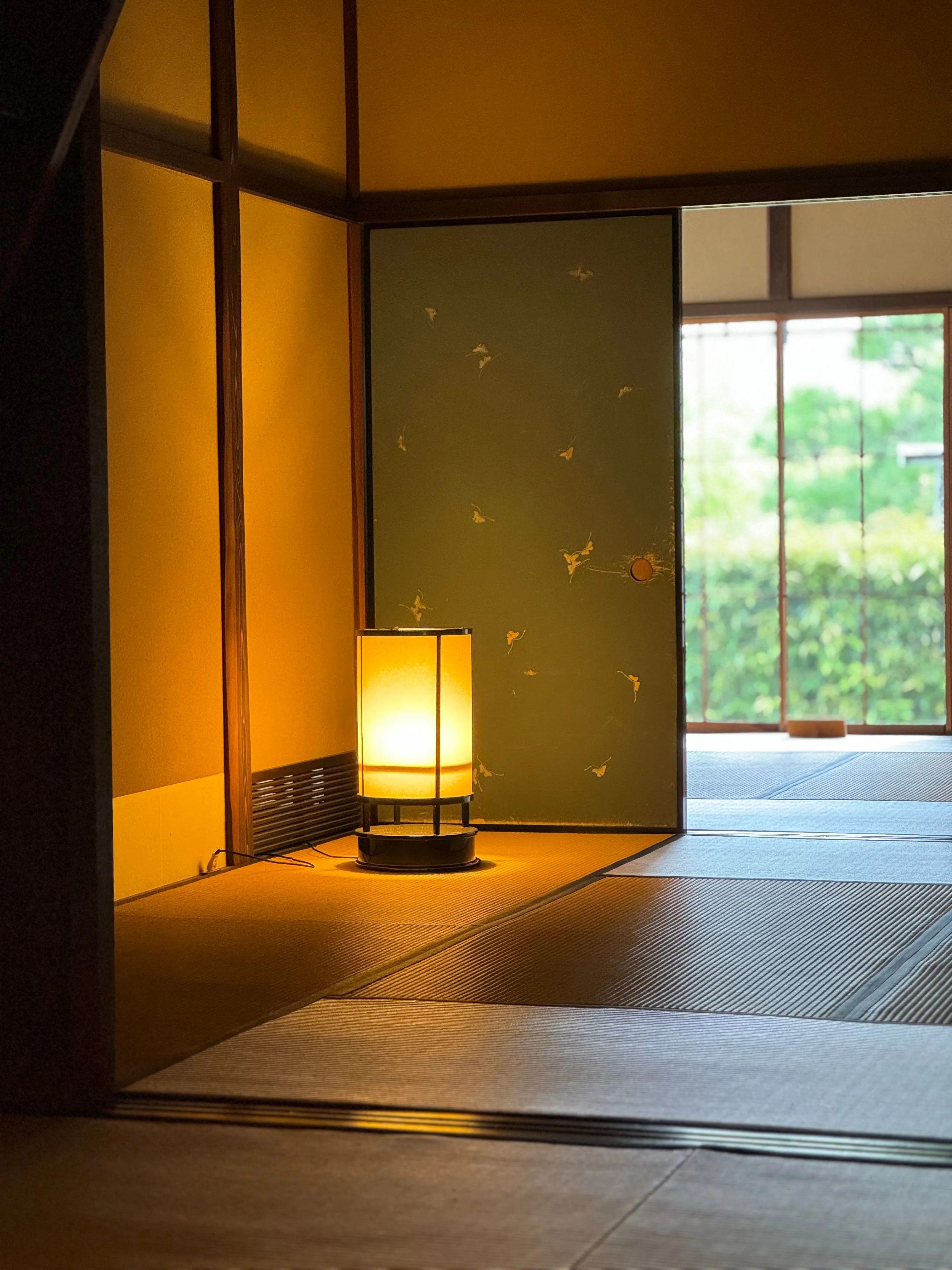
One of the bigger decisions you have to make in terms of cost and comfort has to do with the accommodation choices you make. Ryokans are a unique experience within Japan and by no means the only option. Japan is very much a juxtaposition of very modern conveniences and very old styles of comfort.
With this in mind, for our first trip, my preference in accommodations has been guided by things that feel more uniquely Japanese. We have a mix of options, from the standard modern hotel, traditional ryokan experience with kaiseki dining, minshuku, which are small family-run guesthouses that are often budget-friendly options, and a stay at a dinosaur robot hotel in Osaka.
Capturing a wider breadth of experiences while keeping the trip rooted in culture.
Curation of Choices
I won’t know if these are the right choices until afterward, but these are the pillow landings we have chosen for our trip:
- Hotel Granvia Wakayama — Wakayama City
- Atarashiya Ryokan — Dorogawa
- Fukujuso Onsen Ryokan — Watakano Island
- Guesthouse Sakuraya — Nara
- Naganoya — Kyoto
- Henn na Hotel Osaka Namba — Osaka
Hotel Granvia Wakayama
I chose this one based on reviews as well as a YouTube video done by Japan Guide. It is located close to Wakayama Station, which is where we will be picking up our rental car. I loved the option of being able to land at Kansai International Airport and get here relatively quickly. PLUS breakfast is included!
Atarashiya Ryokan
Located in Dorogawa within Tenkawa Village, near Koyasan, this one I chose because it’s not bougie looking. I love that in their social media and all of the content I could find, they seemed like real people running a ryokan.
When you post videos of laughing and celebrating life with the people around you, that is the vibe we love. Seriously, check out their Atarashiya Ryokan Instagram. I am loving the vibe and will show up for it.
Fukujuso Onsen Ryokan
So this was a journey for me. Originally, I had planned on us staying somewhere in Toba, not far from Ise. There are lots of ryokan there. This was going to be our landing after a day of driving and sightseeing along the way.
The day before heading to Ise Grand Shrine is about the sea and the people there. We want to have lunch with the Ama divers and just celebrate the mutual love of the boundless seas. So I canceled what had been a spendy ryokan in Toba and found this gem while digging around.
I love that reaching the ryokan requires a short boat ride. It adds emphasis to this part of the trip, which we’ve deliberately made very sea-focused. I actually am not sure how I found this place. BUT I am excited! They have a special hot spring here too!
Guesthouse Sakuraya
After we finish our day in Ise, we will be taking the train to Nara. I wanted to spend the night here and wake up early. There are a lot of cool options in Nara, but when Jonathan suggested Sakuraya, it just seemed like a winner.
Sakuraya is a machiya-style guesthouse. Think old Edo-era townhouses. Staying in a machiya has been one of those little architectural experiences sitting in the back of my mind throughout planning this trip. We will be staying in the Hana room by the courtyard.
Naganoya
Kyoto is a place where it is really hard to decide where to stay. It has become very popular with tourists, and so there are areas, think pagoda, where it is very expensive to stay. I love the idea of being there and being able to get up and be in the Gion area, but it is not a deal breaker. I would rather have quiet and calm over the hubbub of tourists.
All of that being said, I found Naganoya on Booking.com. It is close to Nijo Castle and some landmarks that are important to me. A short walk to transit. Naganoya looks comfortable and like a good home base for the days we are there.
Henn na Hotel Osaka Namba
Wrapping up with a day and night in Osaka may not be the time the city deserves, but it is what we can do this trip. I’ve been told that just means you add the things you don’t get to do to the next itinerary, and suddenly you already have a starting point for the return trip.
I am excited about this stay because it has ROBOT DINOSAURS at the front desk! Like, how can you not be excited about that?! This was a Jonathan find, and I am happy to embrace this unique experience because Japan does all the things.
Pillow Landing Planned
So we have places chosen to place our heads and sleep! In many ways, it is really just the framework of where we are going. Now the real work of outlining what we are going to be doing in these places can begin.
Shrines. Temples. Food. Conversations. Lots of gawking at details and trying to absorb it all in. Much of my internal struggle with planning this trip has to do with what I am ruling out in order to ensure we have dedicated time to be present and grounded in the place we are visiting.
I feel it is an incredible disservice to yourself and to the place you’re visiting in that moment to be thinking about the next place. You miss the vibe and joy of where you are.
So hopefully, with this part of the planning complete, we can stop worrying quite so much about where the pillow goes and focus instead on being open to whatever Japan shows us this time around.